Living in Holladay Utah for Move-Up Buyers Leaving Salt Lake
June 4, 2026
June 4, 2026
If Salt Lake no longer feels like quite enough house, yard, or breathing room, you are not alone. Many move-up buyers start looking east and quickly land on Holladay because it offers a more established, residential feel without giving up access to the city. If you are weighing that move, this guide will help you understand what makes Holladay stand out, what the tradeoffs look like, and how to decide whether it fits your next chapter. Let’s dive in.
For many buyers leaving Salt Lake, Holladay feels like a true move-up market rather than just a different ZIP code. Census data shows a median owner-occupied home value of $763,400 in Holladay, compared with $539,500 in Salt Lake City. That gap helps explain why buyers often see Holladay as a step up in both price and overall housing profile.
That higher price point also comes with higher monthly ownership costs. Census reports monthly owner costs with a mortgage at $2,451 in Holladay versus $2,070 in Salt Lake City. If you are planning a move, it helps to view Holladay as a market where you may get more space and a different setting, but you should also prepare for a bigger housing budget.
Holladay is a relatively small city with about 30,588 residents, and Census reports a 78.7% owner-occupied housing rate. That owner-occupied base can contribute to the settled feel many buyers notice right away. Compared with more urban parts of Salt Lake, Holladay often reads as quieter and more established.
The city’s general plan describes Holladay as highly desirable and notes that low-density single-family residential uses make up most of its land area. It also calls the city a bedroom community with intermittent mixed-use centers. In practical terms, that means you are often moving into an area shaped more by homes, yards, and neighborhood streets than by broad urban redevelopment.
Another part of that appeal is visual. Holladay’s planning documents emphasize mature tree canopy, green space, and connected bicycle, pedestrian, and transit links. If you are looking for a place that feels greener and less built-out, that character is one of Holladay’s strongest draws.
One of the biggest reasons move-up buyers consider Holladay is lot size. The city’s general plan explicitly protects existing large-lot patterns, including half-acre lot patterns and estate-type development in some areas. It also describes large and deep residential lots as part of Holladay’s signature character.
That matters because space changes how a home lives. A larger lot can mean more privacy, more room between homes, more outdoor use, and more flexibility for everyday life. For buyers leaving a smaller Salt Lake property, that shift can feel just as important as square footage inside the house.
The plan also notes that country lanes with dense tree canopy are attractive for walking and biking. That helps explain why so many buyers respond to Holladay on an emotional level. It is not just about house size. It is about the overall setting around the home.
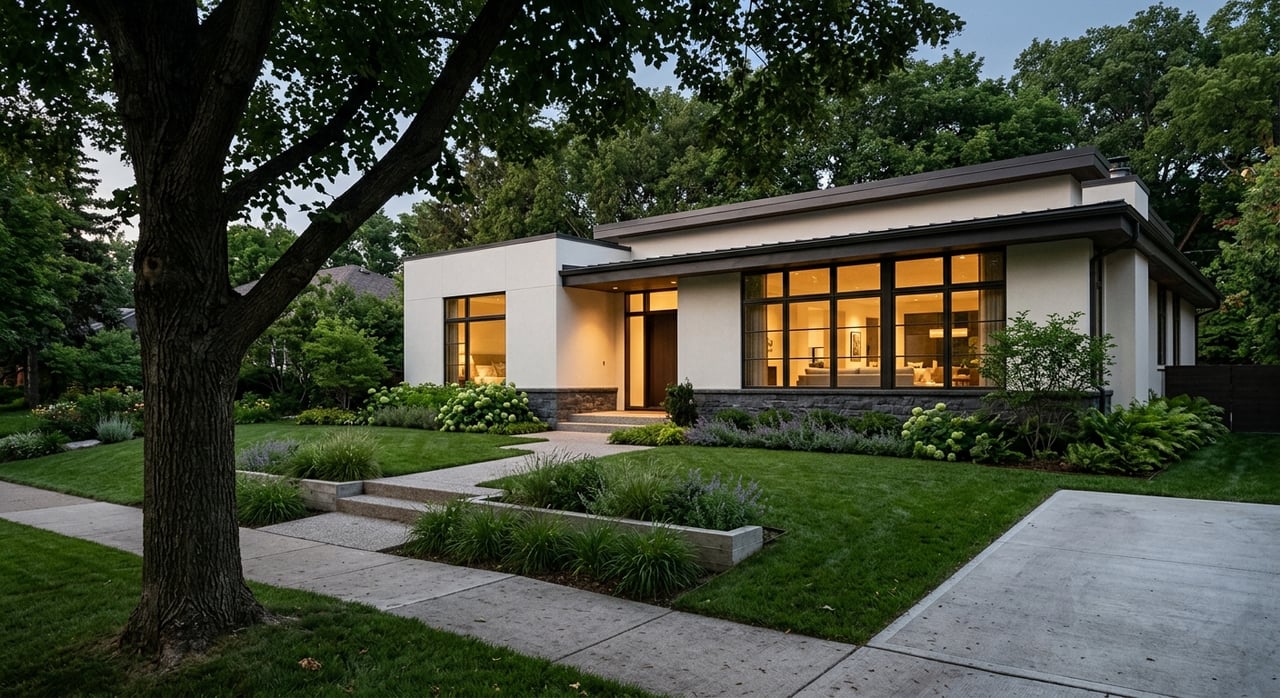
Holladay’s housing stock tends to reflect its long-established residential character. Based on current listing examples in the research, buyers commonly see older single-family homes, especially brick homes and ramblers, alongside some newer custom-built properties. That mix can appeal to buyers who want character, mature landscaping, and homes that do not all look the same.
You may find an updated mid-century rambler on a generous lot, an all-brick home from the 1950s, or a custom home built more recently. That variety is part of the appeal for move-up buyers who want more personality than they may find in heavily redeveloped or more uniform neighborhoods. It also means your search may require a little patience, since inventory can vary a lot from one listing to the next.
If you are moving from Salt Lake, one thing you may notice is that Holladay has not been broadly reshaped by higher-density redevelopment. The city plan says that more intensive redevelopment is concentrated in mixed-use nodes such as Holladay Hills, Holladay Village, and Holladay Crossroads. Much of the core city remains low-density.
That can be a real advantage if you want a more stable residential setting. It may also support long-term appeal for buyers who value consistency in neighborhood character. Instead of block after block of major change, much of Holladay remains anchored by its existing residential pattern.
Holladay’s established look is not accidental. The city has tree-removal guidance that requires permits and replacement planting for protected trees. That helps preserve the mature, wooded feel that many buyers associate with the area.
For a move-up buyer, this can be a major plus. Mature trees can shape privacy, shade, curb appeal, and the overall atmosphere of a property. At the same time, these protections are also part of the practical side of buying in Holladay, especially if you plan to make changes after closing.
For buyers thinking about school access, the key point is simple: check the exact address. Granite School District uses an address-specific school search tool, so you should not assume every Holladay home is assigned to the same schools. Boundaries can vary depending on the property.
In the Holladay area, Olympus High School and Olympus Junior High are local reference points, and both have public Utah School Report Cards available for review. That gives you a factual way to research options as you compare homes. If schools are part of your decision, verifying assignments early can save time and prevent surprises.
Spring 2026 market trackers place Holladay in the high-$700,000s to mid-$800,000s, depending on the source and metric. The research report notes a typical home value of $843,399 from Zillow, a $822,075 median sale price from Redfin over the prior three months, and a $774,900 median listing price from Realtor.com. Those numbers are best read as a range rather than one exact benchmark.
The shared message is clear. Holladay is a premium market, but not necessarily one where every home sells at full ask with no room to negotiate. Realtor.com reported homes sold for 2.4% below asking on average in March 2026, and it characterized Holladay as a buyer’s market.
That does not mean every listing is a deal. It means move-up buyers may have some room to negotiate on the right property, especially if the home is priced ambitiously or has been sitting longer than the most competitive listings.
A move to Holladay often raises one practical question: will day-to-day access still feel easy? Census data shows a mean travel time to work of 19.8 minutes in Holladay. That number suggests the move is often less about a major commute penalty and more about how you navigate specific corridors.
The city’s transportation planning identifies Highland Drive as a major arterial, truck route, and priority transit corridor, while also highlighting I-215 access as a major asset for some districts. So the tradeoff is not simply near versus far. It is more about which part of Holladay you choose and how that location lines up with your routine.
There is also a lifestyle upside. The city plan notes nearby access to the Wasatch Mountains and Canyons, which can matter if outdoor access is part of why you are moving in the first place.
Holladay’s strongest selling points also create some of its biggest tradeoffs. The mature trees, large lots, and established layout that attract buyers can also limit tear-downs, tree removal, additions, and large-scale redevelopment. If you are buying with a future remodel in mind, those rules may matter just as much as the purchase price.
That is why it helps to think beyond the first showing. If your ideal plan includes expanding the footprint, removing major landscaping, or dramatically changing the site, you will want to evaluate those goals early. In Holladay, the setting is part of the value, but it can also shape what is possible later.
At a high level, Holladay appeals to move-up buyers leaving Salt Lake because it offers a different kind of daily experience. You are often trading up to a more residential setting, larger lots, mature trees, and housing that feels established rather than newly remade. For many buyers, that combination feels worth the higher price point.
It is not the right fit for everyone. If you want the lowest purchase price, broad redevelopment, or maximum freedom to reshape a property, Holladay may feel more restrictive. But if you want a greener, more settled environment with strong long-term appeal, it is easy to see why so many buyers put Holladay near the top of their list.
If you are comparing Salt Lake and Holladay, the real question is not just whether you can buy more house. It is whether the overall setting better supports the way you want to live. That is often where Holladay wins.
When you are ready to compare neighborhoods, weigh tradeoffs, and make a move with a clear strategy, Jennifer Jumbelic can help you navigate the Holladay market with candid advice and responsive, relationship-first guidance.
Stay up to date on the latest real estate trends.
She earns the respect of her clients by working tirelessly on their behalf and by always offering them candid advice. Jennifer also utilizes the latest technologies and is supported by a full time marketing team, agents Bobby Vigil and Michael Hernandez along with her transaction manager Amy Tate, all of whom share her attention to detail and passion for perfection. Contact her today!